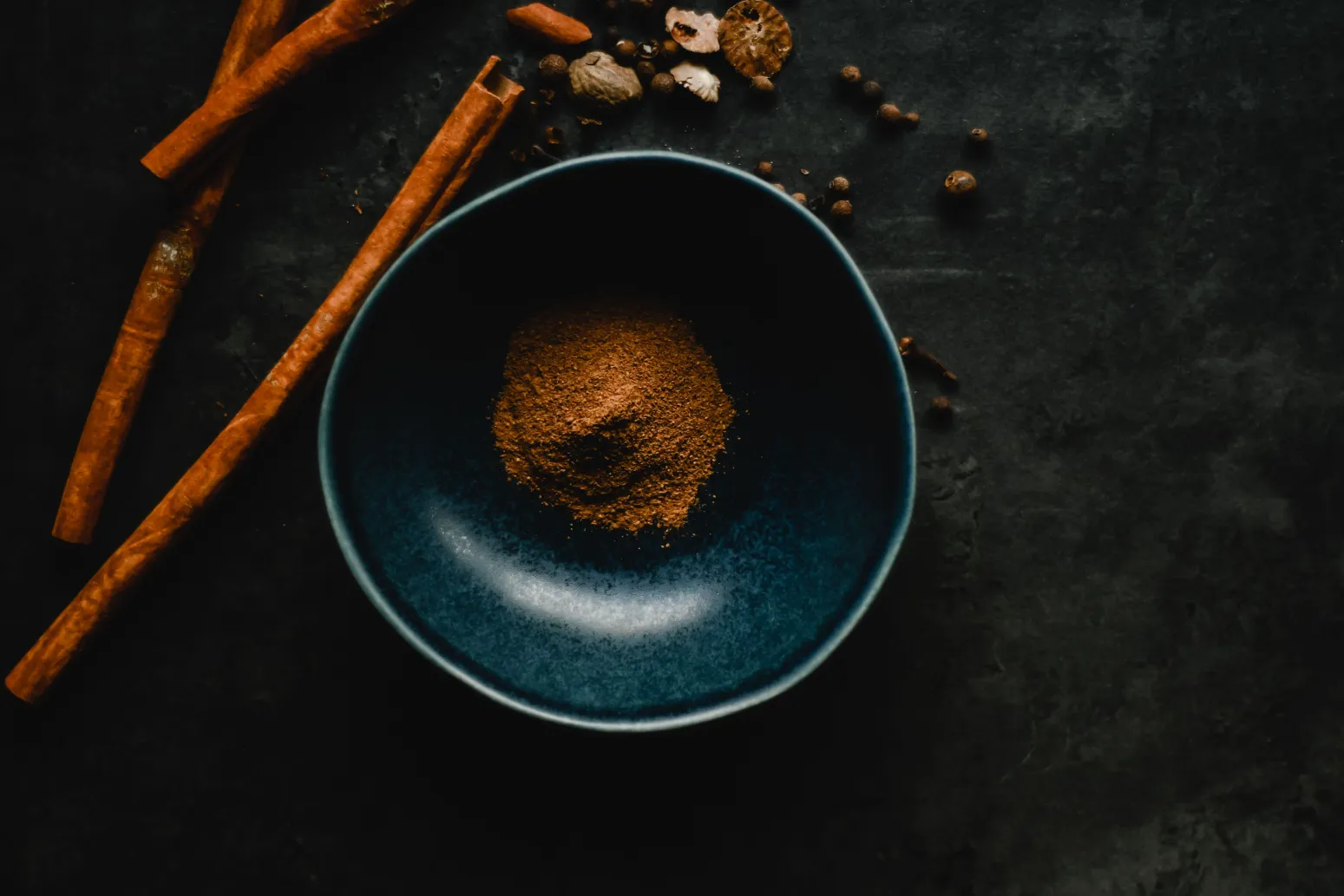
If you have polycystic ovary syndrome, a great deal has been said to you about food. Cut out dairy. Cut out gluten. Cinnamon on an empty stomach. Keto cures it. Apple cider vinegar. A particular herb. A particular vitamin.
Some of it contains something real, some of it has no basis at all, and the difficulty is that both arrive with the same confidence and in the same shape.
This article is not a rebuttal of each claim — such a list would be out of date within a year. It is about a method for judging whatever reaches you, today and in a year's time.
Dr Rana says the first thing she wants to make clear to any patient who arrives carrying that list is this: "PCOS does not mean there is one list of forbidden foods that works for every case."
First: why PCOS in particular attracts this
It is not an accident. There are features of the condition itself that make it fertile ground:
It is common, so the audience is large. It is chronic, so people search for a long time. There is no definitive cure, so there is always an empty space for a new promise. Its symptoms touch sensitive things — weight, hair, skin, periods, fertility. And it is usually diagnosed in young women who are online.
Every one of those features increases the demand for a simple answer, and anybody selling a simple answer has a ready audience. None of which means everything said is false — it means this subject in particular needs to be read with above-average care.
What the international guideline actually says
There is an international evidence-based guideline for the assessment and management of polycystic ovary syndrome, whose updated edition appeared in 2023, developed and endorsed by bodies including the European Society of Human Reproduction and Embryology (ESHRE).
It says specific things worth reading exactly:
That lifestyle modification — diet, activity and the behavioural component — is recommended as a core part of management.
That no single dietary pattern has been shown to be superior to another in PCOS. Which is to say: the guideline itself, whose entire purpose is to state what works, says that no particular diet is the answer.
And that it treats supplements and therapies with limited evidence cautiously rather than recommending them.
Notice who is saying this. Not a clinic, and nobody selling a course. It is an international guideline that gynaecologists and endocrinologists worldwide work from. If there were one eating pattern that treated PCOS, this is precisely the body that would have said so — loudly.
The physiology: what insulin has to do with any of this
To judge a claim, you need to know the mechanism it is claiming to use.
Insulin is a hormone secreted by the pancreas after eating, and its job is to make cells take glucose out of the blood and use it. In insulin resistance the cells respond to that hormone less efficiently, so the pancreas secretes more of it to reach the same result, and circulating insulin ends up running higher than usual.
The important part is that insulin does not act only on glucose: raised levels affect the ovary and the production of androgens — the hormones whose excess is associated with symptoms such as unwanted hair growth, acne and disrupted ovulation.
So talk about food in PCOS is not empty: food affects the insulin response, and insulin has a bearing on the hormonal picture. But — and this is the point that always gets lost — the existence of a plausible mechanism is not the same as a demonstrated outcome.
The difference between a mechanism and an outcome
Most claims that reach you stop halfway.
The shape is this: "substance X affects insulin sensitivity" — which may be true and measured in a laboratory — "therefore it treats PCOS" — which is a leap nobody measured.
Between the two lies a long distance: does that effect occur in a human body at the dose present in food? Does it persist? Does it translate into a change in the symptoms somebody actually came about — periods, ovulation, hair — or does it stay a number in a test?
Watch the verb, too: "improves" is not "treats" is not "prevents", and the vague word is usually vague on purpose.
Inositol is a subtler example, and it is only honest to say so plainly: it is a compound that genuinely has been studied in PCOS, the international guideline addresses and discusses it, and the evidence remains limited and has not reached the level of a firm recommendation. So it is not a myth, and it is also not settled fact. The difference between that description and "inositol treats PCOS" is the difference between honesty and marketing.
Three questions to stop at before you change how you eat
Dr Rana gives her patients a short test that is not tied to any one claim — it is for the next one too:
Every time you hear advice about PCOS, ask three questions:
- Is there evidence for this?
- Does it apply to my case?
- And can I keep it up in a healthy way?
If the answer is not clear, the advice needs a second look before you change how you eat because of it.
So that those questions are a tool rather than a sentiment, try them on cinnamon.
Is there evidence for it? Small studies have looked at its effect on blood glucose, so the answer is not "no". The answer is that something has been measured, but not to the point where the international guideline recommends it as a treatment for PCOS.
Does it apply to your case? That is the question no post can answer. It depends on your symptoms, on the medicines you take, and on what brought you in the first place.
And can you keep it up in a healthy way? That is the easiest of the three — a spoonful of cinnamon in the morning is not hard. But the question here is not about difficulty: it is that this easy thing can take the place of something with evidence behind it, and leave you waiting for a result that is not coming.
The three answers together say one thing. Cinnamon is not harmful, and cinnamon is also not a plan. The distance between those two sentences is what this whole article is about.
Signs that something needs a second look
Dr Rana says the first sign for her is the absolute statement: "If somebody says 'every PCOS patient must do X', or 'this food is completely forbidden for everyone with PCOS', or 'follow this diet and you will cure PCOS for good' — that is where we stop and ask."
The second sign is about what is being sold: "And be careful of anybody who frightens you about ordinary food and then sells you a supplement or a product as the solution."
The order in that sentence is the part to notice: the fear first, the product after. Because the fear is what makes the product look necessary.
And on the other side, the shape that reassures: "Trustworthy advice usually explains why, and who might benefit from it, and who it might not suit. And it does not promise you a guaranteed result in record time."
There is a third sign, more dangerous than the other two: the claim that says "no medication, this is natural". The international guideline discusses medications that have a place in management depending on the case and the goal, and choosing between them is a clinical decision. Somebody asking you to stop a prescribed treatment is not giving dietary advice — it is an intervention in treatment, from somebody who has not seen the case and is not answerable for the outcome.
And something else the guideline says that gets forgotten: activity
The conversation concentrates entirely on food, while the international guideline talks about diet, activity and the behavioural component together as one package, not about food alone.
That matters practically, because activity affects insulin sensitivity directly: a working muscle draws glucose from the blood by a mechanism that does not depend on insulin to the same degree, and regular activity improves how tissues respond to the hormone over time.
So anybody looking only at food is leaving half the recommendation behind. And this is not about a gym or a programme — it is about regular activity of some kind.
Dr Rana puts activity and sleep on the same scale as food when she builds the plan, and her criterion is not the type of exercise or its name: we look at what suits your day and what you can keep doing. So the question is not "what is the best exercise for PCOS?" — the question is what will still be in your day later.
And weight — a point to be made carefully
There is a recognised relationship between weight and insulin resistance, and the international guideline treats lifestyle modification as part of management.
But two things have to be said together: PCOS occurs in women across a range of weights, and not every case is weight-related. Assuming the answer is simply weight loss leaves a great many women without an answer, and loads the whole condition onto one variable.
Dr Rana starts from the goal before she starts from the food: "Not every woman with PCOS has to have weight loss as her goal. And even if she does need to lose weight, she does not have to lose a great deal before she starts to see an improvement."
In an Egyptian kitchen
Talk about PCOS reaches us mostly in translation, and the food named in it is not our food. The practical part is that Egyptian food contains plenty of tools for what the guideline actually recommends: legumes — foul, lentils, chickpeas, black-eyed beans — seasonal vegetables, salad, eggs, areesh cheese, yoghurt and local fish. These are not "substitutes" for foreign food; they are food.
And some things said here specifically deserve clarifying: cutting out baladi bread and rice entirely is not a recommendation in the international guideline; excluding dairy without a clinical reason is not a recommendation; and a gluten-free diet has no bearing on PCOS unless coeliac disease has been diagnosed.
The plan that gets followed in an Egyptian household is the one that works inside the pot already being cooked for everybody, not the one that requires a separate kitchen.
What arrives at the clinic most often
Dr Rana says this is the most common piece of wrong information that reaches her about PCOS: "The moment a woman finds out she has PCOS, she thinks she has to cut out starches and sugar completely, or that fruit is forbidden, or that every PCOS patient has to do keto or intermittent fasting."
And sometimes the list gets longer than that: "No bread, no rice, no milk, no particular fruit… so you find the patient coming into the session feeling that almost all food has become her enemy."
That last sentence is the real problem, not the list itself. Somebody is beginning a long course of follow-up already feeling that food is on the other side.
So where do we start?
Dr Rana says she does not start from food at all: "When a woman with PCOS comes to me for the first time, I don't start with the question 'how do we take the starches out?' — I start with her."
The questions she starts with:
What symptoms do you have?
Is your cycle regular or not?
Has there been weight gain, or difficulty losing it?
Is there unwanted hair growth or acne?
How are your sleep and your activity?
What do you eat through your day?
And what is the thing bothering you most that you want to improve?
And she goes through the diagnosis with you, the medical follow-up, and any tests or medicines connected to the condition.
After that the goal gets set — and as was said above, that is not always weight loss. Then the eating gets built realistically: the quality of the meals, protein and fibre, the amount and type of carbohydrate, activity and sleep, and what suits your day and what you can keep doing.
That order is not an administrative detail. Anybody starting from a list of forbidden foods is writing a plan for a case they have not seen.
And the thing that does not get said enough
PCOS is a condition that is managed, not removed. Serious management involves follow-up over months, markers that get measured, and adjustment when something does not work. The promise of a quick resolution is not merely untrue — it takes time away from something that would have worked.
And Dr Rana adds something she sees a great deal: "Don't take one person's experience on social media as though it were a medical rule. The fact that somebody said 'I stopped eating starches and my period became regular' — that tells you about her experience, but it is not evidence that every PCOS patient needs to do the same thing."
Worth remembering
The international guideline recommends lifestyle modification and states clearly that no single dietary pattern has been shown superior. Insulin genuinely does have a bearing on the picture, but a mechanism is not a demonstrated outcome. And three questions — is there evidence, does it apply to me, can I keep it up — sort most of what reaches you.
As Dr Rana puts it: "With PCOS we are not looking for the diet with the most restrictions — we are looking for a way of eating that suits your case, that helps us reach a clear goal, and that you can keep going with without feeling that every meal is a test."
If you have a diagnosis and want a plan built on your case rather than on a post: PCOS and hormonal nutrition, or book an appointment.
And there is an article on the questions to ask in the consultation itself: questions to ask about hormones and food.
References
This article reports the recommendations of named bodies. These are the documents it reports, so that you can go and read them yourself.
- European Society of Human Reproduction and Embryology (ESHRE) and partner bodies. International evidence-based guideline for the assessment and management of polycystic ovary syndrome. 2023.
- Cochrane. Inositol for subfertile women with polycystic ovary syndrome.
- National Institute for Health and Care Excellence (NICE). Coeliac disease: recognition, assessment and management. 2015.
Share this
These buttons carry no tracking. The link opens on your device, and we do not learn that you shared it.