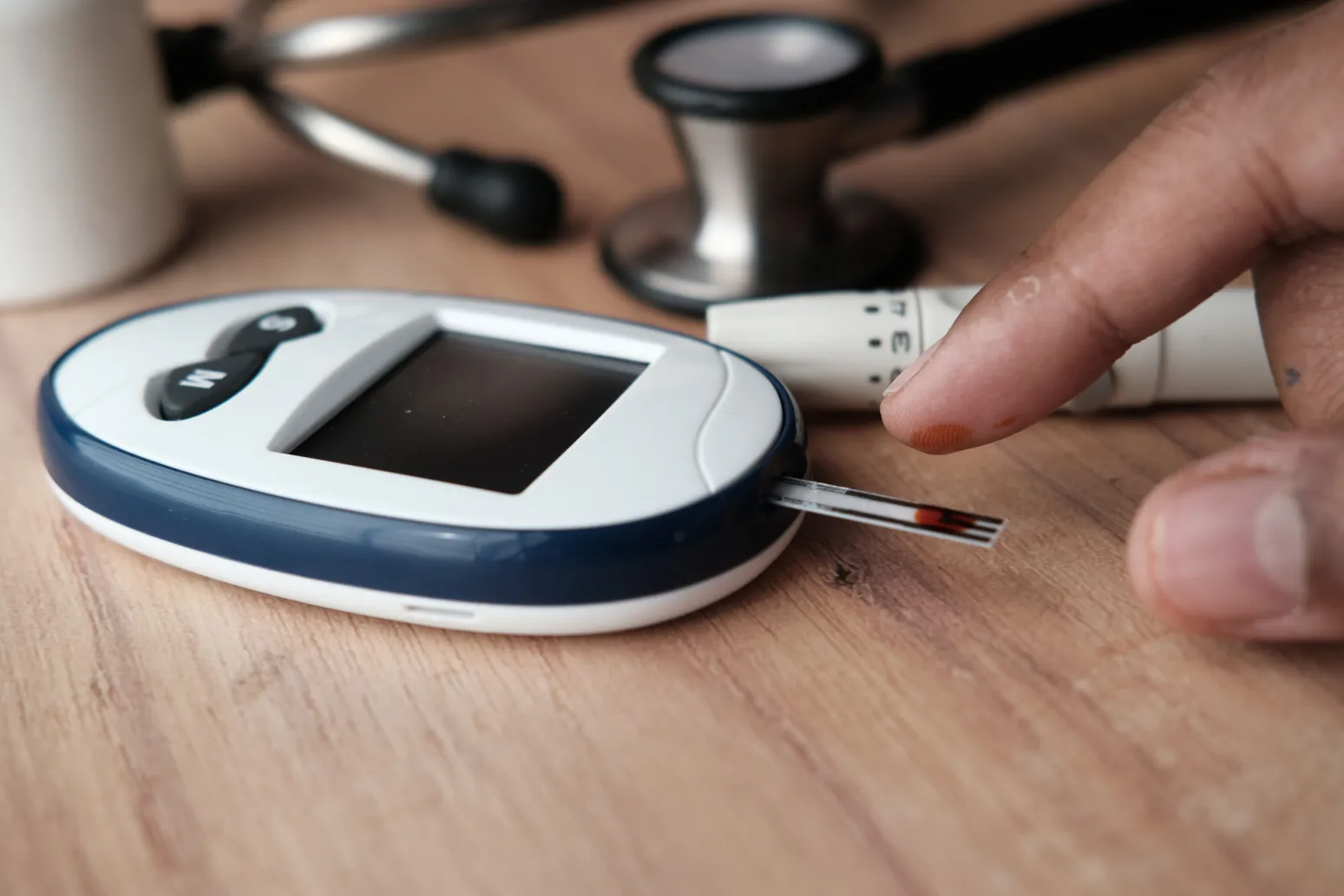
Most of what is written about diabetes is written for a generic patient. And that generic patient has no menstrual cycle, does not become pregnant, does not pass through a postpartum period, and does not reach menopause.
Those four things affect blood glucose in ways that are known and documented. This article is about those differences: what changes, why, and what should be followed.
The point Dr Rana starts from is that the fundamentals do not change: the principles of managing diabetes are the same. What changes is that there are factors specific to women which have to enter the picture — and when they do not, a gap stays open between what the books say and what is actually happening.
First: what insulin resistance actually is
For the rest of the article to make sense, the mechanism has to be stated.
Insulin is a hormone secreted by the pancreas after eating. Its job is to open the door for glucose to enter cells and be used as energy, or stored.
In insulin resistance, cells respond to that hormone less efficiently. The door has become heavier. The pancreas compensates by secreting more, and glucose stays in the normal range for a long time — at a price: a high circulating insulin level.
That period can last years with no symptoms at all. And when the pancreas's capacity to compensate declines, glucose begins to rise — which is when tests show anything.
So the interval between insulin resistance beginning and a diagnosis appearing is long, and that is what gives early screening its meaning.
The menstrual cycle and blood glucose
The hormones that change across the cycle — particularly in its second half — affect how sensitive tissues are to insulin. The result is that the same food, the same dose and the same activity can produce different readings at different points in the month.
The phenomenon is described most clearly in the type 1 diabetes literature, but the same principle is discussed in the context of insulin resistance more generally.
The practical importance is that a woman measuring her glucose and finding fluctuation she cannot explain may be seeing something that has an explanation — and that explanation will not appear if nobody asks about where she is in her cycle.
And in the other direction: changes in appetite and food preference across the cycle are real too, and affect the eating itself.
Dr Rana cautions against generalising here in particular: the effect is real and described, but its size and its shape differ from one woman to another, and a general rule stated for everybody will not fit anybody. What helps is knowing your own pattern.
And the method is practical: record the readings against the day of your cycle, not the readings on their own. After two or three months a pattern shows — or it shows that there is no pattern, which is information too.
And one thing has to be said plainly here: do not change your doses yourself just because you have noticed your glucose is higher for a few days. That pattern is looked at with the doctor following your case, and it is the doctor who decides whether an adjustment is needed. Noticing is your job; adjusting is theirs.
PCOS and diabetes — the clearest intersection
This is neither a coincidence nor a passing observation: insulin resistance is central to a large proportion of PCOS, and it is the same mechanism that underlies type 2 diabetes.
Which is why the international evidence-based guideline on PCOS treats the metabolic dimension as part of managing the condition, and why the American Diabetes Association, in its Standards of Care, includes PCOS among the conditions warranting attention to diabetes risk.
So a woman with a PCOS diagnosis holds important information about a future risk — and it is information she can act on, which is exactly the difference between knowing early and knowing late.
Dr Rana puts it in exactly this shape, and the shape is deliberate: "Having PCOS does not mean that getting diabetes is inevitable… it means we have a stronger reason to pay attention early — not a reason to be afraid."
There is an article on that condition and on the claims made about it: PCOS and food — how to judge a claim.
Pregnancy: before and during
Pregnancy by its nature increases insulin resistance — a normal physiological change that keeps glucose available to the fetus. The pancreas compensates. When that compensation is no longer sufficient, gestational diabetes appears.
And the important distinction is that this is not "mild diabetes" — it is a condition that is followed, because it affects the pregnancy and the birth.
A woman with diabetes before pregnancy has a separate matter to consider: planning. NICE has guidance devoted to diabetes in pregnancy from preconception through to the postnatal period, and the ADA Standards address preconception care for women with diabetes.
The part that gets left out: this begins before pregnancy, not after it. And those decisions are made with the doctor following the case, rather than after a pregnancy is confirmed.
After birth: the screening that gets forgotten
This is the most important sentence in the whole article.
A woman who had gestational diabetes is at higher risk of developing type 2 diabetes later. The ADA recommends glucose testing at a defined interval after delivery for these women, and periodic screening thereafter for life.
What happens in practice is that the matter closes with the birth. The pregnancy ended, the glucose came back, and the paperwork went into a drawer.
That test is not a routine with no purpose. It is the difference between finding a condition at forty and finding it at fifty-five with complications already beginning.
There is an article on that whole period: postpartum nutrition — the mother in the first six months.
Menopause
Around the cessation of periods there are hormonal changes accompanied by changes in body composition — particularly in the distribution of fat — and in insulin sensitivity.
The result is that a woman who has been stable for years may notice a change in weight or in glucose readings without having changed anything about her eating. And that usually gets read as a personal failing, when it is an expected physiological change.
The information that makes a difference is that this is a time when the plan changes, not a time when the person is blamed.
And something else that changes at menopause: bone
At the same time there is a change in bone density related to the decline in hormones, which makes calcium, vitamin D and activity — resistance training in particular — part of the picture rather than a separate subject.
So a plan at this age is not only about glucose. And that is precisely what makes an individual plan different from general advice about diabetes.
A point worth knowing: cardiovascular risk
There is a consistent finding in systematic reviews: diabetes raises the risk of cardiovascular disease proportionally more in women than in men.
Which is to say that having diabetes erases part of the difference that otherwise exists between the sexes in cardiac risk.
This is rarely said to a patient, although it changes the priorities of follow-up: blood pressure, lipids and smoking become part of managing diabetes rather than separate subjects.
A practical point beside it: medications taken for other conditions can affect glucose. Hormonal contraception, corticosteroids, and some thyroid medications all bear on the picture, and all of them should be mentioned in a consultation.
Symptoms that present differently
Some symptoms arrive in women in a form whose explanation can be delayed:
Recurrent fungal infections (candida) and recurrent urinary tract infections can be related to raised glucose, because high glucose provides a favourable environment for microbial growth and affects resistance to infection.
So a complaint treated in isolation each time it occurs may be a sign of something else behind the door. That is not always what it means — it means it is worth mentioning.
Myths
"Diabetes comes from eating too many sweets." This simplification is widespread and creates guilt with no purpose. Type 2 diabetes develops from insulin resistance, with genetic factors and factors related to lifestyle, weight, activity and age. Added sugar is part of the picture, not the whole picture — and people who eat sweets do not get it, and people who do not eat them do.
"Gestational diabetes ended at the birth." Why that is wrong is above.
"Fruit is forbidden." Fruit contains natural sugar and comes with fibre, water and nutrients. It is handled within the shape and size of a meal, not by blanket exclusion. And a blanket exclusion removes a good food source and makes the plan harder with nothing gained.
"If I feel well, my glucose must be fine." Chronic elevation can produce no clear symptoms for a long time. How you feel is not a measurement.
In an Egyptian kitchen
Baladi bread, rice, pasta and koshari are starches, and starch is part of eating. What makes the difference is the amount, the shape of the meal, and what is eaten alongside.
The same quantity of rice with salad, vegetables and a protein source produces a different response from the same quantity alone. And legumes — foul, lentils, chickpeas — carry fibre and protein, and are eaten in every household.
Dates come up constantly in Ramadan and at occasions. Dates are real food containing concentrated sugar, and they are handled by amount and context — not by prohibition, and not by treating them as permitted because they are natural.
And fasting
Fasting in Ramadan is a decision with clinical dimensions for anybody with diabetes, particularly on medication that lowers glucose.
There is specialist practical guidance on diabetes and Ramadan covering risk stratification, treatment adjustment and monitoring during fasting. Which is to say this is a subject with a literature behind it, not a matter of personal judgement.
And that decision is made before Ramadan with the doctor following the case, not on the first day.
The questions that get asked and find no answer
There are questions Dr Rana hears from women with diabetes almost every time, and for which they have nowhere else to ask:
My glucose rises before my period — is that normal?
How will pregnancy affect this? And can I plan for it?
I had gestational diabetes — am I at risk now?
What will menopause change?
And how do my medicines relate to my food?
None of those is marginal. Every one of them changes something in the follow-up, and every one has answers that exist in the literature — but there is rarely time in a consultation for them to be asked.
And managing diabetes is not "cut out sugar"
That shorthand wastes more time than anything else.
Managing diabetes involves the shape of a meal and how it is spread across the day, the kind of carbohydrate rather than its presence, the protein and fibre and fat alongside it, activity, sleep, stress, the medicines and their timing, and the follow-up that says what is working.
And food taken off a list comes back in the first difficult week. What lasts is the shape somebody can live inside.
Worth remembering
Insulin resistance precedes a diagnosis by years, which is what gives early screening its meaning.
The menstrual cycle affects glucose readings. PCOS shares the same mechanism directly. Pregnancy raises resistance by its nature, and planning for it begins beforehand. Gestational diabetes has a postpartum test that gets forgotten. And menopause changes the picture without the person having changed anything.
And cardiovascular risk in women with diabetes is a point worth knowing that changes the priorities of follow-up.
And one last thing from Dr Rana, which matters more than any fact above it: "Don't blame yourself for every high reading. The number is information, not a mark in an exam."
Because the goal is not to be handed a list of foods to follow — the goal is that you understand what is happening in your body, so that you know how to act when circumstances change, instead of having to ask somebody every time.
If you have a diagnosis and want a plan that accounts for all of this: medical nutrition therapy, hormonal nutrition, or book an appointment.
And if you have results nobody has explained: my results are normal and I am still exhausted.
References
This article reports the recommendations of named bodies. These are the documents it reports, so that you can go and read them yourself.
- American Diabetes Association (ADA). Standards of Care in Diabetes. 2025.
- European Society of Human Reproduction and Embryology (ESHRE) and partner bodies. International evidence-based guideline for the assessment and management of polycystic ovary syndrome. 2023.
- National Institute for Health and Care Excellence (NICE). Diabetes in pregnancy: management from preconception to the postnatal period. 2015.
- Systematic reviews and meta-analyses of diabetes and cardiovascular risk by sex. Sex differences in diabetes-associated cardiovascular risk.
- Specialist practical guidance on diabetes and Ramadan. Practical guidelines for the management of diabetes during Ramadan fasting.
- World Health Organization. Fact sheet: Diabetes.
Share this
These buttons carry no tracking. The link opens on your device, and we do not learn that you shared it.